Saturday, August 15, 2020

RIP Bill Yeoman

The legendary University of Houston football coach has passed away.
Bill Yeoman, a standout lineman and teammate of Heisman Trophy winners Doc Blanchard and Glenn Davis at Army, who would go on to shepherd the University of Houston into the top tier of college football as the Cougars' coach for 25 years, died Wednesday at age 92. 
His son, Bill Jr., said Yeoman died of pneumonia and kidney failure.
Yeoman had been hospitalized with COVID-19, and things looked hopeful after he was released from the hospital at the beginning of the month. Unfortunately, he simply couldn't recover from the ravages of the disease.
Yeoman took over as coach at Houston, then an independent, in 1962. He invented the veer offense, a triple-option attack similar to the wishbone. The ESPN College Football Encyclopedia quoted Yeoman as saying, "We stumbled upon it, really. Almost by accident." 
Yeoman dared to recruit Black athletes before any major program in Texas, signing back Warren McVea to a scholarship in 1964. Between his recruiting and his offense, Yeoman created an offensive machine. The Cougars famously defeated Tulsa 100-6 in 1968, the first season they finished in the top 20 (18th). 
"Coach Yeoman was a leader and visionary in our game," current Houston coach Dana Holgorsen said in a statement. "Not only was he a Hall of Fame coach, but also he brought our program to national prominence during his tenure. His legacy will live on in our program and will stand the test of time. Our thoughts and prayers are with his family, former players and coaches." 
Houston's success under Yeoman created a path to membership in the Southwest Conference. Houston won the SWC in its first season (1976), finishing 10-2 with a No. 4 national ranking. The Cougars won three more SWC championships (1978-79, 1984) under Yeoman. 
He retired in 1986 with a record of 160-108-8. The College Football Hall of Fame enshrined Yeoman in 2001.
In addition to the aforementioned 1976 season, the Cougars also finished the season in the AP top ten in 1973 (#9) and 1980 (#5). Between the 1969 and 1980 seasons, in fact, the Cougars ended the season with a national ranking nine times - the best such stretch in program history. Yeoman's teams were also 6-4-1 in bowl games. For many UH fans, especially the older ones, Yeoman's tenure represents the "glory days" of UH football; looking at the program's record since then, it's hard to argue with that. He put the program on the map.

I met Coach Yeoman on several occasions: at alumni luncheons, at events for season ticketholders, and at the games themselves. In addition to being very friendly and fun to listen to - he had no shortage of stories to tell - he also retained his passion for UH football, encouraging people to buy tickets and keep the faith.

Thank you, Coach Yeoman, and rest in peace. Ryan Monceaux has more.

Monday, August 10, 2020

A small wedding and a socially-distant honeymoon

Well, we did it.
Corinne, myself, and the sunset over Lake Pontchartrain, just as we had planned.


On the evening of Saturday July 18, Corinne and I had our formal wedding ceremony at Lakefront Airport in New Orleans. We had about 35 people in attendance: mostly close friends and family, and less than half the number we were expecting for our originally-planned March ceremony, but still within the State of Louisiana's limit of 50 attendees for events such as these.

This was good, as it gave people a chance to spread out; we encouraged social distancing and mask-wearing as much as we could (although it gets hard for people to comply as food is served and champagne flows), and our awesome venue caterer was very good with their sanitation protocols. Over three weeks after the ceremony, we've gotten no reports of any of our attendees falling ill from COVID. We're thankful and relieved.

Our wedding occurred almost two years to the day from
when I proposed to Corinne in Kranjska Gora, Slovenia.
I celebrated by posting on that village's Facebook page
and received a wonderful response from them.
To be sure, the decision to go forward with the rescheduled ceremony was agonizing for both myself and Corinne. We knew that a lot of people wouldn't be able to attend and we knew that we could be putting ourselves and our loved ones at risk. As we watched the infection rate increase both in Texas and Louisiana, we even considered postponing again or canceling entirely (after all, we were already technically married). But in the end, for reasons both contractual and psychological, we decided to press ahead, to make the best of it while being as safe as possible, and to give our family, our friends and ourselves a small bit of enjoyment in the middle of this otherwise-interminable Coronavirus bleakness.

In retrospect, it was the right decision. The ceremony and reception were everything Corinne and I had planned (see here for some early pictures from our wonderful photographer). The food and cake were delicious. Our vendors were happy to be working a wedding again. Everybody in attendance had a good time. Nobody got sick. And it's all behind us now: no more stress of planning and preparing, no more agony of waiting.

We had our wedding, and it was good.

We stayed in New Orleans for a couple of days after the wedding, visiting with family and friends who remained. Then, on Tuesday July 21, Corinne and I got into a rented Chevy Impala and embarked upon a honeymoon roadtrip that we were probably looking more forward to than the wedding itself. After spending the night with friends in Knoxville, Tennessee, we made our way to Gatlinburg and the Great Smoky Mountains National Park. We spent a few nights at a secluded cabin on the Tennessee side of the park before heading south and spending a couple more nights at another secluded cabin on the North Carolina side, and spent the time hiking, relaxing and enjoying the scenery. While there were lots of people in the park itself and mask-wearing was not universal, we were generally able to keep our distance as we hiked. Car-based excursions such as the Roaring Fork Motor Nature Trail and the Cades Cove Loop also allowed for social distancing. The only big crowds we encountered were at Clingmans Dome, and even those weren't horrible. I was also finally got to see what the view from the observation deck looks like when not completely obstructed by fog, although the walk up there brutally reminded me how fat and out of shape I am.

Th observation deck at Clingmans Dome without the fog
After spending several days in the Great Smoky Mountains, we spent a few more days driving the Blue Ridge Parkway. This was a much better experience for me than my first drive along the road eight years ago, as there was no fog to obscure visibility and the Impala handled the curves much better than my previous rental. However, it turned out that three days is still not enough to see all the sights and take all the hikes along the Parkway; it was also a bit disappointing that most of the visitor centers along the Parkway were closed due to the pandemic or that a particularly scenic section of the Parkway around Roanoke was closed due to mudslides. Nevertheless, we enjoyed what we were able to see; the Blue Ridge Parkway is fascinating in that you can learn about biology, geology, geography and history all at once as you drive along it, and the views (as long as they're not obscured by overgrown vegetation) are spectacular.

A view of the North Carolina countryside from the Blue Ridge Parkway
We ended our trip with a brief drive through Shenandoah National Park, and spent the last two nights of our honeymoon in Fairfax, Virginia. The original plan was to spend a day in Washington DC, as Corinne had never been there. However, after the Mayor of Washington issued a decree requiring anybody entering the city traveling from "high-risk" areas (such as Texas or Louisiana) to self-quarantine, we decided that entering the city would not be a good idea. Instead, we went to the National Air and Space Museum's Udvar-Hazy Center near Dulles Airport. I enjoyed it, since I hadn't been in over a dozen years and wanted to see some new items that had been added to the collection since then. Corinne enjoyed it, too, because she got to see the Space Shuttle Discovery and other NASA artifacts that greatly interested her. The Smithsonian limited crowds by requiring people to make reservations in advance and required visitors to wear masks at all time, so we felt very safe visiting.

A Concorde, among other aircraft at the Udvar-Hazy Center
The following day we drove up to Baltimore-Washington International Airport, dropped off the rental car, and flew back to Houston. While flying on an airplane may have been the riskiest part of our trip (or maybe not), Southwest is taking things seriously by limiting their boarding groups to ten people at a time, keeping middle seats open, requiring passengers to wear masks at all times, and reducing points of contact as much as possible. That meant, unfortunately, no beverages (other than water) and no working the crossword in the in-flight magazine. But the precautions appear to have worked in our case, because Corinne and I are showing no symptoms of any diseases a week and a half after the flight.

All in all, it was a wonderful and much-needed vacation. But now, unfortunately, the fun is over and it's time for me to get back to work. Due to the high infection rate here in Houston, my employer has abandoned the practice of allowing some of us to go into the office a couple of times a week on a rotating basis. This means I'll be working from home full-time for the foreseeable future, and I'm not excited about that. I did get my computer repaired (a failing hard drive was causing it to operate slowly), so I'll be able to be at least somewhat productive here at home. But it's just a matter of time before I start to go stir-crazy again, and it will only be worse if I don't have any college football to look forward to this fall.

Which begs the question: is it too early for Corinne and me to start planning our next roadtrip?

Did The Rock just save the Roughnecks?

It will be interesting to see where this goes:
The sale of the XFL to a group that includes actor Dwayne Johnson was approved Friday morning in a Delaware bankruptcy court.

U.S. District Judge Laurie Silverstein allowed the transaction after the XFL resolved a dispute over the $15 million sale price with the court's unsecured creditors' committee. Johnson, along with business partners Dany Garcia and RedBird Capital Partners, will officially assume control of the league from former owner Vince McMahon later this month.
The sale also includes nearly $9 million in payment of cure amounts.
So now that the XFL has new owners, can we expect a third reboot next spring?
The league had marketed itself as a made-for-TV product that could transition to a bubble concept during the pandemic, and Garcia said this week that the new owners are "planning" for a 2021 launch.

"We're doing all the steps that need to happen for the execution of that," she said. "But we're also being mindful to what has actually been successful. It has been really interesting to see that [in sports], when you create a bubble, your players are safe. When you don't, it's chaos. We are a league, because of the number of teams we have, that actually can create a bubble environment. Those discussions are active."
I'd be surprised if the new ownership group could re-staff the league and turn things around in time for a 2021 season. It could be doable with only eight teams, but it's just one of the many questions that still surround the league following this sale. Including the most important question of all: will it ever make any money?
This remains the elusive question for spring football. There hasn't been a successful alternative to the NFL in 50 years, largely because no one has figured out how to make it profitable.

Broadcast fees are the lifeblood of successful major sports leagues, but they take time to earn. The XFL's 2.0 plan called for three seasons of investment and proof of concept before that point would come. Its 2020 television deals with Fox and Disney (ABC/ESPN) covered only production costs.

A 2021 bubble concept would eliminate all the costs associated with placing teams in multiple cities, as well as much of the local revenue. It also would reduce the number of players the league would need to sign for training camps, a substantial savings. But the XFL 3.0 likely will need to secure broadcast fees on some level to ensure long-term success.
I wish Johnson and his business partners the best, and I hope a third time really will be the charm for the XFL. The Roughneck games I attended last spring (ahh, such sweet memories of the days before the whole world went to pot) were a lot of fun and I'd enjoy attending more in the future. 

Sean Pendergast shares his thoughts.

Adventures in vexillological illiteracy

This is facepalm-worthy:
A couple who came under attack for displaying the Norwegian flag outside their mid-Michigan inn because some observers mistook it for a Confederate flag have found another way to show their Scandinavian pride. 
Greg and Kjersten Offenbecker, who own The Nordic Pineapple in St. Johns, outside Lansing, took Norway's flag down last month after being accused of promoting racism, the Lansing State Journal reported.
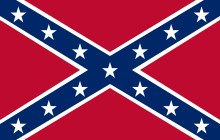
Apparently, people were confused because both flags feature a blue cross on a red background. The two flags are otherwise completely different; one cross is diagonal while the other is orthogonal, and one has stars while the other does not:

                        Flag of Norway.svg
Flag of a failed, racist, treasonous cause* on the left; flag of a modern, successful OECD member and NATO ally on the right. Images: Wikipedia

The owners of the inn think they've found a workaround: they'll use a different style of the Norwegian flag that should reduce potential confusion:
They are replacing it with a vimple, a type of long, pennant-shaped flag that can be seen displaying various designs across Scandinavia. The Offenbecker’s vimple will have the colors of the Norwegian flag — a red background with a blue cross superimposed on a white cross — in a nod to Kjersten Offenbecker’s grandfather who was born in Norway.
These pennant-shaped flags are apparently very common in Norway, since the use of the official flag is highly regulated.

While the Offenbeckers' solution is actually rather ingenious, it's honestly not something that they should have been forced to do in the first place. While the public display of racist symbols such as the Confederate flag should obviously be challenged, that's not what was happening here. This family should not be accused of racism or be forced to modify the perfectly legitimate flag they fly on their property just because some people are too ignorant to tell the difference between two clearly dissimilar flags.

*This was never the official flag of the Confederacy, and I'll probably get criticized for even displaying it on my blog.

Wednesday, July 15, 2020

The end of the Midtown Fiesta

Can't say I'm surprised:
Houstonians will say farewell to a Midtown supermarket favorite, Fiesta Mart, after its parent company announced it will be closing the doors this Friday.
Considered an iconic neighborhood fixture in Midtown, Fiesta gave shoppers a vast selection of fresh produce and international foods. The store is located at the intersection of Wheeler and San Jacinto.
Like the also-shuttered Sears next to it, that Fiesta was easily visible from I-69 and was, for decades, a landmark in the corner of Midtown. It was there well before townhomes and luxury apartment complexes began springing up around it. I've shopped there on a few occasions, and while it was very no-frills, it had everything you'd expect from a Fiesta, including lots of fresh produce, a variety of international foods, aromas from the in-store tortilleria, and a beer selection that put many other stores to shame.

Fiesta's parent company explained the reason for the closure:
"It is with difficulty that we announce that the Fiesta Mart store located at 4200 San Jacinto will be closing at the end of business on Friday July 10th," Rodriguez wrote in a statement sent to Chron.com. "The decision to close this store was not taken lightly, but due to the expiration of our lease and a number of newer grocery stores in the area we had to make this difficult decision. Despite tremendous efforts by our dedicated store employees and our operations, buying, merchandising and other support teams, sales performance of the store has continued to decline over the past few years."
By "a number of newer grocery stores in the area," they're obviously referring to the two H-E-Bs that have opened within a couple of miles of that Fiesta within the last decade: the Montrose H-E-B on West Alabama that opened several years ago, and, more significantly, the MacGregor H-E-B at North MacGregor and 288 that just opened last fall.

The MacGregor H-E-B was certainly the nail in the coffin, as it siphoned off shoppers from both the Museum District and Third Ward that would have otherwise gone to that Fiesta. Whatever Fiesta's charms may be, it simply can't compete with what is now considered the nation's best supermarket chain.

Unfortunately, due to its location, that Fiesta also had a homeless problem. A fence had to be built around the parking lot to discourage loiterers and panhandlers.

Rice University owns the property on which the store sits. It will be interesting to see what takes its place.

Tuesday, July 14, 2020

The conservative case against single-family zoning

Charles Marohn argues that "there is no greater distortion of the market than local zoning codes" and calls for the elimination of single-family zoning on "small government" principles:
The first of many ironies, of course, is that single-family zoning became the standard for American suburbs during the New Deal when the Roosevelt administration, through various programs such as the Home Owners Loan Corporation, required it for home refinancing assistance. 
These onerous regulations were further mandated for new construction by the Federal Housing Administration as well as the government-sponsored enterprises Fannie Mae and Freddie Mac. 
So if you want federal support for your housing, build a single-family home. If you want to live in that downtown shop with the house on the second floor, convert your house to a two- or three-unit building and rent it out—or do any number of normal and reasonable things that humans had been doing with their property for centuries to build their own wealth and prosperity—don’t expect assistance from the government. 
Yet now that we’ve lived with this artificial distortion for a couple of generations, and piled on others like the mortgage-interest tax deduction, some strange conservative instinct kicks in to defend this bankrupt institution. In reality, the Pilgrims built a traditional town surrounded by farmland. Our government paid us to move to the suburbs. Invoking the memory of the former to defend the latter is an historical absurdity.
Marohn's knockdown against single-family zoning was apparently triggered by an article by Stanley Kurtz in the National Review which claimed that Joe Biden and the Democrats want to "abolish the suburbs."  This claim, which has also been made by Donald Trump and is centered around the Affirmatively Furthering Fair Housing provision of the 1968 Fair Housing Act, is dubious. Marohn argues that, if conservatives were intellectually honest, they would be demanding an end to single-family suburban development on the grounds of economic efficiency: 
The suburbs run on federal subsidies. Without them, America’s suburbs would have to become more financially productive. They would need to get greater returns per foot on public infrastructure investment. That would mean repealing repressive zoning regulations, allowing the market to respond to supply and demand signals for housing. It would also mean allowing the “little downtowns” Kurtz fears to form where demand for them exists. Isn’t that what is supposed to happen with self-government and local control? 
All this would have to happen or the suburbs would go away because they can’t exist without excessive and ongoing federal subsidy. 
The progressive left has discovered that single-family zoning has racist underpinnings. That’s great, because we should now have no problem finding common cause for repealing this most distorting of regulations, one that the federal government never should have forced cities to adopt to begin with. 
In fact, the conservative thing for suburban leaders to do here is to not wait for the federal government to tempt us with more handouts, but to go ahead and show those progressives running the big cities that we live by our principles, that we embrace vibrant markets and free people, by preemptively repealing single-family zoning.
While I'm not sure I agree with Marohn's implication that single-family zoning is largely the result of "big government" (as opposed to a largely locally-driven effort fueled by NIMBYism), I do agree with him that single-family zoning is, like minimum parking regulations, a relic of late-20th-century land use control that needs to be phased out. Zoning started out in the early 20th century as a way to protect residences from nuisance uses such as factories or slaughterhouses, but it has evolved into a tool to enforce socioeconomic exclusion. 

Anybody who has read this blog knows that I, a former zoning officer for the city of Denton, am not a fan of traditional land-use zoning, and am thankful that Houston is the largest city in the nation without it.

It's looking like no college football this fall

This would normally be the time of year where I begin to think about the coming football season: I begin looking for the preview magazines in the stores, I spend more time reading discussions on University of Houston athletics message boards, and I even begin thinking about tailgating menus. However, I'm not doing any of that right now. Absent a miracle between now and the scheduled beginning of the season seven weeks from now, I'm not expecting there to be any college football in 2020.

Yahoo! Sports columnist Pete Thamel is a hack who is rarely correct, but I have a suspicion that this may be one of the few times he's right:
Take a deep breath, and begin to get comfortable with the idea there’s virtually no chance of playing college football in any recognizable form this fall. Start digesting the notion that the next time we see a college football game could be in more than 13 months, as the sport remains the most unlikely of all the major sports to execute a successful return. Consider any semblance of college football prior to Week Zero of 2021 as a bonus, an improbable gift from the football gods. 
With the MLS struggling in a supposed bubble, MLB officials botching the testing portion of its return and an increasing amount of pessimism about the prospect of an NFL season, only a medical miracle can save college football this fall. 
“Right now, I don’t see a path in the current environment to how we play,” said a Power Five athletic director. “I’m confident we’ll get back to what we all think of as normal, but it may be a year before that happens.” 
Here’s the cruel truth about how college football leaders approached football this fall: The entirety of their plan to return was based on hope. Hope that the COVID-19 would go away. Hope that college campuses wouldn’t be a petri dish for the virus. Hope that they could figure out a way to play a contact sport in a time of mandatory social distancing. Hope for a vaccine to keep players healthy and seats full. 
A strategy of hope isn’t much of a strategy, and a half-dozen coaches and officials told Yahoo Sports this weekend that hope is being vanquished. It’s all over in the minds of many coaches and athletic directors, as the sport will keep pushing back to buy time until the inevitable happens. 
“Ultimately, no one is playing football in the fall,” said a high-ranking college official. “It’s just a matter of how it unfolds. As soon one of the ‘autonomy five’ or Power Five conferences makes a decision, that’s going to end it.”
In order for college football to happen, we would need to be moving past the coronavirus pandemic right now. But that's not happening: the current wave of infections is easily surpassing what we witnessed in the spring, and that's not a trend that is going to improve anytime soon. States are going back into quarantines and movement restrictions, and it's unclear if universities will even risk holding in-person classes this fall. No students on campus, no sports.

Even if the games could be held this fall, they would likely have to be done so with few, if any, spectators in the stands. That might be feasible for a handful of schools who get a large amount of revenue from television contracts. It would, however, be a financial disaster for most others, especially "Group of Five" institutions such as Houston. And even the schools in the best financial position don't want to assume the legal and medical liability they could incur should a student-athlete become gravely ill:
The worry among coaches remains the same: Are we really going to keep pushing forward with the season and wait until there’s a player hooked up to a ventilator in an ICU and have that become the sport’s Rudy Gobert shutdown moment? Luckily so far – from Clemson to Texas to North Carolina, among those we know about – there have been no known hospitalizations among the college football players who’ve tested positive. But coaches remain concerned that players with pre-existing conditions like sickle cell trait could be at increased risk. 
With at least two Power Five conferences - the Big Ten and the PAC-12, announcing a switch to conference-only schedules, the snowball is already rolling downhill. The next step, I predict, will be for conferences to delay the start of the season until mid-October. Then they'll delay until the spring
of 2021. Then, they'll cancel the season altogether.

It's going to suck for everyone: the fans, the students, the coaches, and especially the players. In American culture, fall and football are synonymous. It's going to feel very empty to have one without the other.

But until we get a handle on the Coronavirus, this is where we are.

Saturday, June 27, 2020

Pandemic Link Dump

Passing along a handful of random articles and topics I've come across over the last month or so...

Urban freeways are a product of racial injustice, and its effects are still being felt here in Houston.  I've touched on this before, and in the wake of the protests for racial justice sparked by the murder of George Floyd, it's become a topic once again. Urban freeways were largely built through minority neighborhoods, dividing and displacing their inhabitants. Decades later, those scars remain:
Thousands of peaceful protesters in the Twin Cities occupied Interstate 94 over the weekend as they marched from the Minnesota State Capitol in St. Paul to Minneapolis. 
For the region’s African-American community, which has been leading the ongoing protests over the fatal arrest of George Floyd and the use of police force on black Americans, the concrete they were standing on bears significant meaning. 
It was this highway that, in the 1950s and ‘60s, tore apart the once-thriving neighborhood of Rondo — the heart of St. Paul’s largest African-American community — and helped spur decades of racial segregation in the region. 
Minnesota Governor Tim Walz acknowledged as much during a Saturday press conference. "It wasn’t just physical — it ripped a culture, it ripped who we were. It was an indiscriminate act that said this community doesn’t matter, it’s invisible,” he said. “This convenient place to put a highway so we can cross over this place and go from the city out to the suburbs.”
The once and future effects of these freeways remain a topic of controversy today, even here in Houston as TxDOT continues forward in it plan to reconstruct IH-45 north:
Members of the Houston-Galveston Area Council’s transportation advisory committee this week voted to keep portions of the I-45 project in the area’s short-term transportation plan, but with a host of caveats. Chief among those conditions is that the Texas Department of Transportation respond in detail to a set of requests from Houston planners outlining exactly what they can and cannot do to stay within the freeway’s existing boundary and agree in writing to protect displaced residents and businesses. 
The lack of clear commitments worries skeptics, who fear neighborhoods affected by the massive redesign from downtown north to Beltway 8, such as Northside, Independence Heights and Fifth Ward, will continue to bear the brunt of TxDOT and Houston’s highway expansion. For decades, neighborhoods along I-45, I-69 and I-10 north and east of downtown have felt the effects of living within shouting distance of the freeways, as mostly white officials routed the thoroughfares through black and Hispanic communities. 
“A vote on this project that continues those very systems of oppression, disparity and racial inequities without addressing the real problems is only supporting and continuing that system of racism,” said Oni Blair, a member of the transportation advisory committee and executive director of LINK Houston, an advocacy group that has organized opposition to the I-45 plan.
The IH-45 north rebuild provides an opportunity to improve the freeway while at the same time address the impacts that the freeway has historically had on adjacent communities. TxDOT needs to listen carefully, and not repeat the mistakes of the past:
“To leave I-45 as it is currently configured would be a mistake,” said Carol Lewis, director of Texas Southern University’s Center of Transportation Training and Research. 
Ignoring the issue of social justice would be, too, she said. TxDOT has gone to historic lengths to solicit comment but must now reconcile those concerns with its plans and the engineering analysis of how the new freeway and changes to it will affect how people and freight move. 
What is clear, Lewis said, is that TxDOT cannot brush aside how the freeways got where they are now. 
“I think historically TxDOT has been 100 percent guilty of being 100 percent insensitive,” Lewis said, noting what is now I-69 along the east side of downtown gutted Fifth Ward.
How do we get people back on the bus? I wrote a couple of months ago about the essential role of public transportation during the Coronavirus crisis. Now, as local economies reopen, transit agencies need to convince "non-essential" commuters that it is safe to start using transit again:
Masks are mandatory on subways and buses in Washington. San Francisco is betting longer trains will help riders social distance. Crews disinfect New York’s trains daily -- stations twice a day -- and are testing ultraviolet light devices to see if they kill Covid-19 on surfaces. 
As states gradually reopen, transit agencies are taking steps to coax back passengers who’ve been told for months to avoid just such tight quarters with strangers -- an effort that will ultimately influence the economic recovery. 
“For certain businesses teleworking isn’t really an option, so we still need to figure out ways to get those people to work,” said Ed Mortimer, vice president of transportation and infrastructure at the U.S. Chamber of Commerce. 
Especially in urban areas, where many people don’t own cars, mass transit will be crucial to reviving economies. But enticing passengers back on board may require adding trains and buses so people can space themselves further apart -- adding stress to agencies already reeling from declining ridership and rising cleaning costs.
Public transportation might not be the disease vector it's feared to be, but it's understandable that people are going to be wary of crowding on board buses and trains with other strangers. Transit agencies are poised for a slow and difficult recovery, especially since people are likely to commute differently in a post-COVID world, and they probably need to re-think the way they provide service and define success both during and after the pandemic. That being said, our cities will not experience full economic recovery unless their transit networks also recover.

Could Houston become a climate policy leader? Maybe:
April was supposed to be a big month for Houston city planning. America’s largest unzoned city was poised to host the American Planning Association’s national convention for the first time, bringing thousands of attendees to town. Walking tours were arranged; awkward cocktail mixers were scheduled. 
Of course, with a global outbreak of the coronavirus, it wasn’t meant to be.
I cannot begin to express how much I was looking forward to the APA's National Planning Conference being here in Houston, as I had never attended this event before. Likewise, I cannot begin to express how bummed I was when it was canceled in the midst of the Coronavirus pandemic. I hope the APA makes plans to return to Houston with this is all over.
Undeterred, Houston quietly adopted the Bayou City’s first citywide climate action plan on the 50th anniversary of Earth Day. If city leaders can pull it off, America’s sprawling oil capital could end up teaching a lot to more traditionally green urban strongholds.
The city's climate action plan is intended to be a blueprint to Houston reducing its impact on the environment. Given the city's characteristics - the refineries, the sprawl - that's going to be a challenge, so the plan includes both standard and innovative elements.
The plan includes plenty of mainstay climate-policy prescriptions, including calls to electrify the city’s fleet of vehicles, switch to renewable sources of energy, and improve energy efficiency in buildings. But then things become rather unique. The city’s first bicycle master plan, adopted in 2017, gets a lot of play, as does the MetroNEXT Moving Forward plan, a widely lauded $3.5 billion push to overhaul mass transit in the notoriously auto-oriented city. The emphasis on mobility makes sense, since nearly one-third of U.S. greenhouse gas emissions come from transportation, and Houston maintains one of the highest rates of automobile use in the country. 
Toward this same end, one of the plan’s more innovative proposals calls on policymakers to eliminate minimum parking requirements by 2030. While Houston famously lacks zoning — meaning that it doesn’t segregate uses or restrict densities — it still enforces some conventional land-use regulations. These include minimum parking requirements, which mandate that developers build off-street parking for each project, regardless of actual demand. In Houston, this can mean up to two parking spaces for every apartment or four spaces for every thousand square feet of office space.
Houston's lack of zoning, furthermore, might make it easier for the city to redevelop in a sustainable manner, featuring more walkable, mixed-use, higher-density development, than other cities that are incumbered by an onerous development process that is subject to NIMBY interference.
The city has a long way to go before it becomes anyone’s idea of an environmental exemplar. But if all goes according to plan, Houston could soon rank among those cities that have scrapped out-of-date parking requirements — a group that conspicuously doesn’t include progressive stalwarts like Portland and New York City. In a city otherwise famous for its supposed lack of planning, easing up on the right rules might just turn Houston green.
Stay tuned.

"The right thing - just at the wrong time." Take a few minutes to read this excellent XFL postmortem by ESPN's Kevin Seifert. The article takes a look at why the well-funded league suddenly folded (it might not have been completely due to Coronavirus), it's prospects for revival, and the potential for spring football generally:
"We still don't know that spring football works in this country," said Andrew Kline, founder of the investment bank Park Lane, which specializes in sports investments. "Football season is so intense, and it's just associated with the fall season. You wonder if part of the cycle is that people need to come down from it for a while."
I'm obviously a fan of spring football, but its track record is dismal, and as even as the XFL winds its way through bankruptcy proceedings, I'm skeptical that we'll ever see another Houston Roughnecks game again. At any rate, it appears that we could have to go for awhile without any football at all. Which will make my fall miserable, to say the least.

The removal of Confederate statues and monuments should not be a "liberal" endeavor. I can't believe I'm actually linking to Rich Lowry in the National Review, but in this case he's right:
Conservatives […] reflexively oppose politically correct campaigns to destroy anything giving offense. 
They fear where the slippery slope of woke iconoclasm will lead — first it’s Jefferson Davis, ultimately George Washington. 
They value tradition and worry we are trashing part of our history.This impulse, though, is a mistake. Confederate statues and symbols deserve to be reevaluated, and often mothballed. 
The statues are an unnecessary affront to black citizens, who shouldn’t have to see defenders of chattel slavery put on a pedestal, literally. 
It is impossible to evaluate these monuments without considering the context of why they were created. Many of them were erected as part of the push to enshrine a dishonest, prettied-up version of the Confederacy.
Lowry ends by noting that "secession was a traitorous act that threatened to destroy the American nation, to create a rump republic built on slavery, and to make impossible the subsequent rise of the United States to a world power." Liberals and conservatives alike should understand the fact that the Confederate States of America was, quite simply, a racist and treasonous enterprise that was defeated over a century and a half ago.

I occasionally come across the argument that the removal of Confederate statues and monuments is somehow "erasing history." This is bullshit. There are no monuments to Hitler or Rommel or Göring in Germany, but we still know that county's history - a history the German people of today most certainly do not want commemorate.

These statues and monuments belong in museums, battlefields, and military cemeteries. They do not belong in our parks, our squares or our capitol grounds.

Last but not least, congratulations to Liverpool.

Coronavirus cases surge in Houston

Houstonians were hoping to emerge from lockdown to find the Coronavirus pandemic behind us. Unfortunately, that's not what's happening:
An explosion of the novel coronavirus in Houston has put the nation's third-largest* city at the epicenter of the nation's public health crisis as hospitals fill and officials warn of impending catastrophe.
Harris County officials reported a shocking 1,994 new coronavirus cases on Tuesday alone, a new record. The county has reported more than 1,000 new cases on three of the last four days. Models show the number of cases rising over the next four weeks. 
“We're approaching a precipice of disaster,” County Judge Lina Hidalgo (D) told reporters at a briefing this week. “We're looking at very, very concerning numbers in our hospital population that are getting worse by the day.”
Harris County has confirmed more than 23,000 coronavirus cases since the outbreak began. About 330 people have died. Neighboring Fort Bend County has reported another 3,100 cases.
It's not just the Houston area; all of Texas is experiencing a surge in coronavirus cases (that we should have seen coming). Yesterday Governor Greg Abbott ordered bars statewide to close and announced other restrictions, while here in Harris County Judge Lena Hidalgo issued a countywide stay-at-home advisory. While local physicians have applauded these attempts to slow the trend of virus transmission, it may be too little too late.

Quite simply, people here (as in the rest of the country) have become fatigued by the lockdowns, social distancing orders, and other restrictions designed to slow the spread of the virus. Now, with summer upon us, Americans might be giving up on the fight against the pandemic altogether:
For several weeks at the beginning of the outbreak in the U.S., the need to control the virus took precedence over other concerns. Now, for many people, the pandemic is no longer the most pressing national issue. As protesters and some public-health officials have said they are weighing the harms of police violence against the risk of increased viral spread and choosing to gather in the streets, state governments have made similar risk-reward arguments about balancing public-health and economic concerns. The virus does not care about these trade-offs. Retail reopenings and racial-justice protests may exist on different moral planes, but to the virus they both present new environments for spreading. 
Maybe the U.S. will somehow avoid another New York–style outbreak. Maybe the number of new infections will not grow exponentially. Maybe treatments have sufficiently improved that we will see huge outbreaks, but fewer people will die than we’ve come to expect. If so, it won’t be because the United States made concerted, coordinated decisions about how to balance the horrors of the pandemic and the frustration of pausing everyday life. Instead, the United States has moved from attempting to beat the virus to managing the harm of losing.
It's for this reason that another round of shutdowns is unlikely. It's frustrating to realize that we've essentially squandered three months of a social and economic shutdown aimed at combatting the virus, but that's the reality of where we are right now. At this point I fear that we're going to have to continue to limp through this pandemic until either a vaccine becomes available or herd immunity is achieved (at the cost of tens of thousands of more lives).

So stay at home as much as you can, wash your hands, and wear your damn mask when you're out.

Kuff has more, including how we got here.

(*This is an error on The Hill's part. Houston hasn't passed Chicago yet and is still #4.)

Status update

I think I've been able to weather the pandemic as well as anyone, and for that I am thankful. I'm still working from home most of the time, although over the past month my employer has begun allowing some of us to go into the office once or twice a week, on a rotating basis so as to limit the number of people in the office at any one time. I've enjoyed being able to do this, because it keeps me from going stir-crazy at home and it also allows me to get a few things done that are difficult for me to do from home (my employer's VPN connection works well for most of the programs I use, but not all of them, and my home computer, having reached the end of its useful life, is very slow).

As of right now, Corinne and I are going ahead with our rescheduled (not officially a) wedding ceremony next month in New Orleans. We've been in contact with our venue about sanitation practices and, quite frankly, we're going to have so few people attending that social distancing is not going to be a problem. We realize there's still a risk involved, but we're also already locked in to contracts with small businesses that need our support now more than ever. Deferring the ceremony until the pandemic passes in 2021 or even 2022 simply isn't an option, so we're going to be as safe as we can, make the best of it, and give ourselves and our guests something to enjoy during this otherwise difficult period.

Since our previously-planned honeymoon in Maui has been nixed, we will honeymoon in the Great Smoky Mountains instead. We will also drive the Blue Ridge Parkway from the Great Smoky Mountains to Shenandoah National Park (reprising a vacation I took almost a decade ago). That should hopefully give us plenty of opportunities for outdoorsy, socially-distanced activities such as hiking and sightseeing. Corinne and I are looking forward to it.

As of right now I am still holding out hope that there will be a college football season this fall, but I won't be surprised if it gets canceled as well. Which will really suck.

Everybody stay safe!